Keynote Speeches
Keynote Speech I
Distributed coordination control of multi-agent systems under intermittent sampling and communication
Qing-Long Han
Swinburne University of Technology, Australia
Sampling and communication are both crucial for coordination in multi-agent systems (MASs), with sampling capturing raw data from the environment for control decision making, and communication ensuring the data is shared effectively for synchronized and informed control decisions across agents. However, practical MASs often operate in environments where continuous and synchronous data samplings and exchanges are impractical, necessitating strategies that can handle intermittent sampling and communication constraints. This Keynote Speech will provide a comprehensive survey of recent advances in distributed coordination control of MASs under intermittent sampling and communication, focusing on both foundational principles and state-of-the-art techniques. After introducing fundamentals, such as communication topologies, agent dynamics, control laws, and typical coordination objectives, the distinctions between sampling and communication are elaborated, exploring deterministic versus random, synchronous versus asynchronous, and instantaneous versus sequential scenarios. A detailed review of emerging trends and techniques is then presented, covering time-triggered, event-triggered, communication-protocol-based, and denial-of-service-resilient coordination control. These techniques are analyzed across various attack models, including those based on data loss, sampled data, time constraints, and topology switching. By synthesizing these developments, this survey aims to equip researchers and practitioners with a clearer understanding of current challenges and methodologies, concluding with insights into promising future directions.
Biosketch
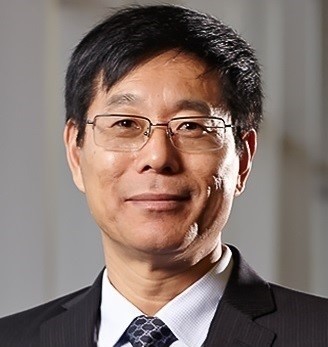 Qing-Long Han
is Pro Vice-Chancellor (Research Quality) and a Distinguished Professor at Swinburne University of Technology, Melbourne, Australia. He held various academic and management positions at Griffith University and Central Queensland University, Australia.
Professor Han was awarded the 2024 IEEE Dr.-Ing. Eugene Mittelmann Achievement Award (the Highest Award in Industrial Electronics), the 2021 Norbert Wiener Award (the Highest Award in systems science and engineering, and cybernetics), the 2021 M. A. Sargent Medal (the Highest Award of the Electrical College Board of Engineers Australia), the IEEE Systems, Man, and Cybernetics Society Andrew P. Sage Best Transactions Paper Award in 2019, 2020, and 2022, respectively, the IEEE/CAA Journal of Automatica Sinica Norbert Wiener Review Award in 2021, and the IEEE Transactions on Industrial Informatics Outstanding Paper Award in 2020.
Professor Han is a Member of the Academia Europaea (The Academy of Europe) (MAE). He is a Fellow of the Institute of Electrical and Electronics Engineers (FIEEE), a Fellow of the International Federation of Automatic Control (FIFAC), a Fellow of the Asian Control Association (FACA), an Honorary Fellow of the Institution of Engineers Australia (HonFIEAust), and a Fellow of the Chinese Association of Automation (FCAA). He is a Highly Cited Researcher in both Engineering and Computer Science (Clarivate). He has served as an AdCom Member of IEEE Industrial Electronics Society (IES), a Member of IEEE IES Fellows Committee, a Member of IEEE IES Publications Committee, Chair of IEEE IES Technical Committee on Networked Control Systems, and the Co-Editor-in-Chief of IEEE Transactions on Industrial Informatics. He is currently the President-Elect, an Executive Board Member, and a Steering Committee Member of the Asian Control Association (ACA). He is currently the Vice President of the Chinese Association of Automation. He is currently the Editor-in-Chief of IEEE/CAA Journal of Automatica Sinica.
Qing-Long Han
is Pro Vice-Chancellor (Research Quality) and a Distinguished Professor at Swinburne University of Technology, Melbourne, Australia. He held various academic and management positions at Griffith University and Central Queensland University, Australia.
Professor Han was awarded the 2024 IEEE Dr.-Ing. Eugene Mittelmann Achievement Award (the Highest Award in Industrial Electronics), the 2021 Norbert Wiener Award (the Highest Award in systems science and engineering, and cybernetics), the 2021 M. A. Sargent Medal (the Highest Award of the Electrical College Board of Engineers Australia), the IEEE Systems, Man, and Cybernetics Society Andrew P. Sage Best Transactions Paper Award in 2019, 2020, and 2022, respectively, the IEEE/CAA Journal of Automatica Sinica Norbert Wiener Review Award in 2021, and the IEEE Transactions on Industrial Informatics Outstanding Paper Award in 2020.
Professor Han is a Member of the Academia Europaea (The Academy of Europe) (MAE). He is a Fellow of the Institute of Electrical and Electronics Engineers (FIEEE), a Fellow of the International Federation of Automatic Control (FIFAC), a Fellow of the Asian Control Association (FACA), an Honorary Fellow of the Institution of Engineers Australia (HonFIEAust), and a Fellow of the Chinese Association of Automation (FCAA). He is a Highly Cited Researcher in both Engineering and Computer Science (Clarivate). He has served as an AdCom Member of IEEE Industrial Electronics Society (IES), a Member of IEEE IES Fellows Committee, a Member of IEEE IES Publications Committee, Chair of IEEE IES Technical Committee on Networked Control Systems, and the Co-Editor-in-Chief of IEEE Transactions on Industrial Informatics. He is currently the President-Elect, an Executive Board Member, and a Steering Committee Member of the Asian Control Association (ACA). He is currently the Vice President of the Chinese Association of Automation. He is currently the Editor-in-Chief of IEEE/CAA Journal of Automatica Sinica.