Plenary Speech
Plenary Speech I
Key Technologies, Products, and Applications of Wearable Non-invasive Brain-Computer Interfaces
Yuanqing Li
Pazhou Laboratory
South China University of Technology
Improving target detection and enabling multidimensional control are two fundamental challenges in brain-computer interface (BCI) research and essential issues for clinical translation. We first introduce several multimodal brain-computer interaction methods that improve target detection or enable multidimensional control. We then present clinical applications. For patients with high-level paraplegia caused by cervical spinal cord injury, we developed an environmental control system integrating a wheelchair, home appliances, and a nursing bed, enabling brain control and improving independent living. For stroke patients, we developed a BCI-based upper-limb rehabilitation system. For patients with disorders of consciousness, we developed BCI systems for consciousness detection, assisted diagnosis, and prognosis of rehabilitation; compared with clinical behavioral scales, these methods and systems offer clear advantages. To improve mental health, we developed BCI-based systems for emotion regulation, attention training, and mindfulness meditation. Finally, we introduce the progress of commercialization. Based on these systems, we have developed wearable BCI products, including a brain-controlled AI mouse, a brain-controlled AI wheelchair, a brain-controlled AI smart ward, and BCI-based attention-training products. In particular, the BCI-based mindfulness meditation product can support stress reduction, improved sleep, mood improvement, relief from depression and anxiety, and prevention of motion sickness (a first-reported finding in China and abroad), and has received positive user feedback.
Biosketch
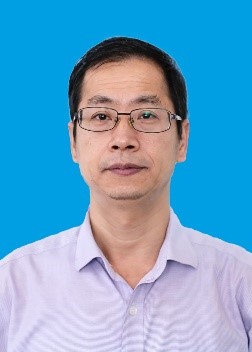 Yuanqing Li
is professor and doctoral supervisor at South China University of Technology; Executive Deputy Director of the Guangdong Artificial Intelligence and Digital Economy Laboratory (Guangzhou)/Pazhou Laboratory; Chairman and Chief Scientist of South China Brain-Control (iHNNK) Company; an IEEE Fellow; a recipient of the National Science Fund for Distinguished Young Scholars; and a Distinguished Professor under the Ministry of Education's Changjiang Scholars Program. He has received one Second Prize of the State Natural Science Award, one First Prize of the Natural Science Award of the Ministry of Education, two First Prizes of the Guangdong Provincial Natural Science Award, one First Prize of the Guangdong Provincial Technological Invention Award, one First Prize of the Wu Wenjun Artificial Intelligence Technology Invention Award, and one First Prize of the Technological Invention Award of the Chinese Association of Automation, among others. He serves as Associate Editor of IEEE Transactions on Human-Machine Systems and other journals. He graduated from Lixian No. 1 High School in 1984, received his bachelor's degree from the Department of Mathematics, Wuhan University, in 1988, his master's degree from the Department of Mathematics, South China Normal University, in 1994, and his Ph.D. from the Department of Automatic Control Engineering, South China University of Technology, in 1997. Since 2000, he has pursued research in independent component analysis and blind source separation, sparse coding, machine learning, EEG and fMRI signal analysis, brain-computer interfaces, and their applications. To date, he has published more than 200 papers in leading international journals and conferences, including IEEE Transactions on Biomedical Engineering, IEEE Signal Processing Magazine, Proceedings of the IEEE, Brain, Nature Biomedical Engineering, Human Brain Mapping, NeuroImage, and NIPS, and has filed and been granted more than 80 patents. The projects he has led include national "Two Priorities" projects, projects under the China Brain Project, projects under the National Key R&D Program of China, and Key Programs of the National Natural Science Foundation of China. He also serves as an Executive Council Member of the Chinese Association of Automation, a Council Member of the Chinese Association for Artificial Intelligence, and a Council Member of the Chinese Society of Biomedical Engineering, among others.
Yuanqing Li
is professor and doctoral supervisor at South China University of Technology; Executive Deputy Director of the Guangdong Artificial Intelligence and Digital Economy Laboratory (Guangzhou)/Pazhou Laboratory; Chairman and Chief Scientist of South China Brain-Control (iHNNK) Company; an IEEE Fellow; a recipient of the National Science Fund for Distinguished Young Scholars; and a Distinguished Professor under the Ministry of Education's Changjiang Scholars Program. He has received one Second Prize of the State Natural Science Award, one First Prize of the Natural Science Award of the Ministry of Education, two First Prizes of the Guangdong Provincial Natural Science Award, one First Prize of the Guangdong Provincial Technological Invention Award, one First Prize of the Wu Wenjun Artificial Intelligence Technology Invention Award, and one First Prize of the Technological Invention Award of the Chinese Association of Automation, among others. He serves as Associate Editor of IEEE Transactions on Human-Machine Systems and other journals. He graduated from Lixian No. 1 High School in 1984, received his bachelor's degree from the Department of Mathematics, Wuhan University, in 1988, his master's degree from the Department of Mathematics, South China Normal University, in 1994, and his Ph.D. from the Department of Automatic Control Engineering, South China University of Technology, in 1997. Since 2000, he has pursued research in independent component analysis and blind source separation, sparse coding, machine learning, EEG and fMRI signal analysis, brain-computer interfaces, and their applications. To date, he has published more than 200 papers in leading international journals and conferences, including IEEE Transactions on Biomedical Engineering, IEEE Signal Processing Magazine, Proceedings of the IEEE, Brain, Nature Biomedical Engineering, Human Brain Mapping, NeuroImage, and NIPS, and has filed and been granted more than 80 patents. The projects he has led include national "Two Priorities" projects, projects under the China Brain Project, projects under the National Key R&D Program of China, and Key Programs of the National Natural Science Foundation of China. He also serves as an Executive Council Member of the Chinese Association of Automation, a Council Member of the Chinese Association for Artificial Intelligence, and a Council Member of the Chinese Society of Biomedical Engineering, among others.